Friday, February 11, 2022

Real Life Ultra-Tech: Gauss Guns Get Real


Praise be to Gun Jesus! 

The absolute mad lad Ian McCollum, curator of Forgotten Weapons (for the 3 of you who follow my channel and somehow don't know who this man is heh), not only landed an interview with ArcFlash Labs who have a prototype commercial friggin' gauss rifle but managed to get one of the prototypes to go over it features but also get some live firing of it at the gun range. He also took it to a BUG match (not sure how a 20lbs brick is a back up gun but I mean he has a gauss rifle. Your objections are irreverent). 


So yeah, I'm geeking out a bit so just a fun little post today. Here's the two videos he has up right now covering the interview and the firing. Tech Level 9 is getting closer and closer lads. 


Sunday, February 6, 2022

Ultra-Tech Firepower: SAA GU 384 Boomslang, 50mmCRH (TL 9)

SAA GU 384 Boomslang, 50mmCRH (TL 9)

The trend since just before the turn of the century is for light armored vehicles to get, well, not so light with each generation getting heavier  and with beefier armor. This has in turn driven the need for bigger and bigger gun armaments that they need to mount in order to keep them competitive with their pears; going from 20-25mm in the beginning to 30mm today and even some designs going for 40mm+! Of course the ultra-tech armors of the future will only compound this factor further. Though as guns get more powerful, their recoil gets worse and you start to run into issues where your near tank level firepower is starting to become to much for the platform to handle and accuracy starts to suffer and the added stress causes the frames life space starts to drop.
 

Suid-Afrika Bewapeningskorporasie, the South Africa Armaments Corporation, developed the SAA GU 384 Boomslang to help counter this limitation. Named after the boomslag, a large venomous snake endemic to the area, as a way to single that this was to be weapon system with a deadly bite! 

William Wilson Passed Away on January 26th. He will be missed.

I have some horrible news guys and I feel so bad I only found out about this over a week after the fact. William Wilson, better known to us as Mook, passed away on January 26th. I'm still trying to process this. While I wasn't on a personal level with him, I did know and interact with him on what I guess I can call a professional level so this does hit a bit hard. There are few that have done as much to spread GURPS out there and try and make it accessible to the masses. From his excellent book, How to be GURPS GM, to his blog (and it's many very usual game aids), he added so much quality and character to our little gaming community. He will be missed. If you have faith, please say a prayer for his family and if you have the means there is a gofundme to help with medical and funeral costs.

Saturday, January 22, 2022

Ultra-Tech Firepower: Big Guns Never Tire


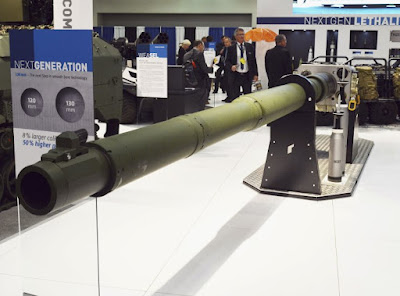
Bigger in fact does seem to be better when it comes to the future of main battle tank guns. Rheinmetall already has a 130mm tank gun model it's shopping around and the US is even looking into the possibility of going up to a massive 140mm gun in some of it's next generation MBT concepts. While the safe money is on the 130mm seeing wide spread adoption, it's not only already is a working model at this point but also it's  largely based on it's already successful RH-120 line of tank guns (and it being the cheaper options doesn't hurt either) making it easier to retrain crews to use and maintain it. The 140mm , while still in development at this point, does still have some advantages in its favor do its larger warhead giving it some more flexibility in munitions and it's greater penetration power will help keep it at over match capacity even against advancements in armor technology.

Well, if you want to seriously up the dakka quotient in your game, follow me after the jump.

Sa-bow indexed!

Tank identified, Twelve-hundred-up! On target!  Fire!

Round away!

Saturday, January 8, 2022

Now You're Shunting With Power


Welp, Star Wars Squadrons came out a while ago and it's kinda great. It not only brings us a much needed spiritual successor to the classic X-Wing/TIE Fighter PC space simulators from the 90's but shows some small degree of proof that EA can actually make a good game that isn't a thinly veiled guise to violate your wallet, intelligence, dignity, and probably you personally if they could figure out a way.   

The game also brings back the ability to shunt power from one system to another letting you prioritize  one system while taking a hit to others. This was an amazing game play feature that defined the original game. It let you adjust the ship you were were flying to not only be better able to take on the current challenge but also to suit your personal preference.  Need to chase down that pesky TIE? You can risk lowering your shields to up your speed. Need to get close to a capitol ship? You can trade firepower to up your shields to better survive the barrage of incoming turbo-lasers. It even made replaying mission more interesting as you could try out different power settings and see what works or purposely gimp yourself for extra challenge. It was also very true to the source material as angling your deflector shield and having an astromech droid divert power were a common troupe.  

Now while Spaceships already has a design switch option that allows you to angle your force screen (GURPS Spaceships, pg. 32), it doesn't have an option to simulate shunting power from one system to power up another one. Of course this is not without good reason as this does add a good deal of paper work to keep tract of and some extra math while designing ship. However if you're not afraid of a little extra crunch (and if you're following this blog there's a good chance you're up to the challenge, do you even crunch bro?) and want to add a little more more variety for the space jockeys in your sci-fi campaign to play around with then I give you a new design switch option: Power Shunting.


Power Shunting   

Many sci-fi series depict the heroes carefully husbanding power from one system to another in a critical moment, boosting its effectiveness at the expense of one that is less important in the current situation. This design switch lets you simulate that troupe. You can only shunt power between high-energy systems and must have at least two usable power points available. All powered system start at level 0, which is the baseline power level. Pick a system you want to boost and select a level you want to boost it to from level 1 up to level 4. Multiply that system's effects or stats by the amount shown in the column that the system you are boosting falls under. You then have to drop another system down to a negative level equal to the level you raised the boosted system to, from level  -1 to level -4,  and multiply its effects and stats by the amount shown in its corresponding column. If you have three or more boost compatible high energy systems plus enough power points to power them all and you boost a system two or more levels you can choose to spread the drained levels across them rather than just lowering the level of one system.   

If you have more high-energy systems then power points to use on them all, you can also use a power shunt to provide some level of power to these systems. For every level you drop a powered system, raise the unpowered one up one level treating level -4 as being unpowered.   

Different kinds of systems are affected in different ways when feed more power. There are three ways a system can be boosted. Systems are either affected in a linear way, by the square root of the increase in power, or by the cube root of the increase. Though there are some systems that can be affected in more than one way, for example increasing the engine power of a craft in atmosphere will increase its thrust linearly but it's top speed will only increase by the square root of it.

Because of this the shunting chart shown below is broken down into three columns with each one corresponding to one of the ways a system can be affected by a power shunt.
 

Power Shunt Chart
Power Level: This column shows the range of settings you can set a systems power level to; from a level of -4 up to a level of +4 with a power level of 0 being the normal operating level for a given system. Each level represents an power increase or decrease of 25% with a level of +4 being a doubling of power and a level of -4 being no power.

 
Colum 1: Square Root
These systems are affected by the square root of the set power level.

-Kinetic energy weapons or beam weapons if you are using the square root of destruction optional rule (Alternate Spaceships, Pyramid 3-24 Alternate GURPS, pg. 9).

-Top speed of jet and ornithopter powered aircraft.


Column 2: Cube Root
These systems are affected by the cube root of the set power level.  

-Beam weapons if you are using the standard rules.

-Top speed for helicopters and surface water and underwater craft.


Column 3: Linear
These systems are affected by a one to one increase in the set power level.  

- Contragravity lifters.

-For any types of propulsion and FTL systems not covered in other columns.

-Shields.

-Factory and Mining/Refinery output.
 
 
Power Level       Square Root      Cube Root        Linear    
-4                       ×0                      ×0                      ×0
-3                       ×0.5                   ×0.6                   ×0.25

-2                       ×7                      ×0.8                   ×0.5
-1                       ×0.9                   ×0.9                   ×0.75
0                        ×1                      ×1                      ×1
+1                      ×1.12                 ×1.1                   ×1.25

+2                      ×1.22                 ×1.14                 ×1.5
+3                      ×1.32                 ×1.21                 ×1.75
+4                      ×1.4                   ×1.25                 ×2         


On a sheet or paper or spreadsheet write down the power level column as you see above and set up a different column for each high powered system that can be power shunted then under them multiply their base effects by the multipliers under the column the column that corresponds to the given system.

For Example: Let's say you have a SM +5 space fighter that has two linear systems, a hot TL 11 reactionless thruster and a TL 11 deflector screen and one cube root system, a 10MJ major battery. It's stats would be be affected as below:


Power Level      Hot  Reactionless    Deflector Screen     Major Battery       
-4                       0                                      0                            0                     
-3                       0.5G                                5 dDR                    2d+2 (2)
                 
-2                       1G                                  10 dDR                    3d+1 (2)                  
-1                       1.5G                               15 dDR                    3d+2 (2)                 
0                        2G                                   20 dDR                    4d (2)                      
+1                      2.5G                               25 dDR                     4d+2 (2) 
                    
+2                      3G                                  30 dDR                     4d+2 (2)                
+3                      3.5G                               35 dDR                      5d-1 (2)                
+4                      4G                                  40 dDR                      5d (2)             


Longer Term Effect
While in most combat situations keeping track of how long you shunt extra power into a system is not needed; however if you are doing this during a long chase or similar situations you do risk straining or even blowing out a system if you run it a higher output then i';s normally rated for for too long.

You can run most systems for a minute or get off 10 shots in succession (at a weapons full ROF) without any issues but for every minute or 10 shots afterwards you need to make a HT roll. On  success the system is fine.  On a failure, the systems safeties kick in and shut the system down for 1d minutes per minute/10 shots the system was used. On a failure of 5 or more the system is damaged in the shut down procedure and will not work again until repaired (see Damage Control, GURPS Spaceships pg. 64). On a critical failure the power was too much for the system to handle and it blew out completely. It is a total wash and needs to be replaced.

If you let the system rest for 30 seconds per minute/10 shots it is boosted it cools back down to normal uses and can be used for 1 minute/10 shots without needing a HT check again.


Hotshotting and Power Shunting
If used, these rules also replace the normal hotshot rules (GURPS Ultra-Tech pg. 133). It is assumed that the more robust power supplies as well as the fact that the weapon can tap into the vehicle's cooling system allows it to fire at a higher output far more safely then you could with a small arm.


Friday, December 25, 2020

Merry Christmas to all my knirschenmeisters!


 Happy holidays every one. Hope you're all chillin' with the loved ones and being all merry and stuff. 


And from the bottom of deep, dark, dank, heart:


Sunday, December 13, 2020

Ultra-Tech Firepower: Wolden & Hawks PDW-7P, 8mmAADR (TL 9)

Note: Slight update

 GURPS forum user Kale made the great suggestion of allowing the forward grip be swapped with a tac light which I should of included from the state. Good call man. He also suggested adding the option of adding a small 20 gauge shotgun in lieu of an idea I had off adding in a really small grenade launcher earlier in my concept phase for this gun. I was looking into maybe adding something like the S&W Governor but then it dawned on me that 15mm gyroc was about the same size as a 20 gauge so I went with that idea instead. Also another forum user by the name Say, it isn't that bad! has said that my stat lines are coming in weird for him. Well I looked into ways to fix it and it looks like Blogger has made it easier to add tables (the last time I tried it was so finicky that I gave up and have been hand adjusting stat lines since) so I have updated the PDW-7P's stat line to have a proper table. It's still wonky AF but hopefully it's more stable.


Wolden & Hawks PDW-7P, 8mmAADR (TL 9)

The PDW-7P was the first fully in-house developed firearm designed by Wolden and Hawks, a very successful gun modding studio run by Greager Wolden and Carter Hawks. With furthering social unrest and increased attacks and kidnapping attempts on high value corporate exec, research engineers, and politicians the team saw a chance to fill the growing need for a compact and easy to conceal high rate of fire weapon that can also defeat most forms of soft body armor to sell to the growing private security firm sector.

Deigning the actual firing platform was the easy part. Based on interviews with potential clients, Wolden & Hawks  only took seven design iterations to come up with the PDW-7P. It was to be handy in closed in fighting situations and with a strong emphasis on making it very easy to holster or conceal and extremely reliable (treat as Fine( Reliable)) so that it didn't jam or fail to feed in the middle of fight. This lead to the weapon being no larger then a heavy pistol (hence the 7P, seven for the seventh design iteration and P for pistol form factor) with a somewhat boxy appearance do to it having an integrated P90 style forward grip in front of the trigger guard which incorporated an ambidextrous fire control selector (which could be switched between safe, semi-auto, 3-round limited burst, and full auto) and a built in telescoping collapsible stock (one ready maneuver to collapse or pull out the stock). This let it be stored and used as readily a normal pistol but with a flick of the selector allowed it to instantly transition into a machine pistol or if better stability and accuracy was needed the stock could be extended turning it into a full on submachine gun. While the weapon only used a standard iron sight and smart gun electronics to keep the weapons bulk down, it did have a top mounted modular rail so buyers could add their own sighting options if needed. The forward half of the forward grip can be removed and replaced with either a tactical flashlight (50 yard beam, $100, 1 A/8hrs. See High-Tech pg. 52) or a under barrel Holdout Gyroc, 15mm (see Ultra-Tech pg. 144 and 145)

The hard part was what to chamber it in. Feedback had reviled a desire to have penetration levels near what the 5.7mmCL could do in a full sized SMG but given that the PDW-7P had a normal pistol length barrel there was not many round that could fit the bill and they were going to have to make their own custom cartridge. After several rounds of simulations and testing they found that a high-pressure round based on a heavily modified 9mmCL cartridge would suit their needs. The base round was necked down to 7.92mm with a 6 gram bulk amorphous tungsten cored projectile. To push for a high muzzle velocity a a higher pressure propellant block was used with a light composite coating applied to the block making it semi-caseless. This coating would briefly contain the expanding gas when the round was fired further increasing the chamber pressure bumping the muzzle energy up by roughly 9.3%. The composite coating is then burned up and ejected out the barrel with the rest of the propellant residue. Between the high velocity and dense core, this gives the round nearly 10mm of penetration of RHA equivalent. Given that the round was close enough to 8mm and its primary purpose it was christen the 8mm Advanced Armor Defeating Round. 

The PDW-7P originally only came with a conventional sized doubled stacked pistol magazine capable of holding 20 rounds to help with concealment  but W & H eventually developed a 33 round extended mag (0.5 lbs, $20) after customer receiving enough customer feed back asking for the option. A third party developed 100 round  C-mag (2 lbs, $160. An integrated A cells powers drum for up to 1,000 rounds. Worsens bulk by -1) also became available but W & H strongly recommend against its use as they viewed it as unreliable (drop Malf. to normal while loaded with this magazine) and the amount of extra bulk it added to the platform was over all incompatible with the weapons concept.

The excellent performance of the weapon however came with a high cost per round which was further impacted by the 8mmADD's production being limited to just its flagship platform. But despite this sales have been have been at lest steady with many of the major private protection firms buying at lest a limited  test of the weapon. This has also lead to other firearm manufacturers to start to take note of the round which may lead to further adoption driving costs down further.


GUNS (SMG) (DX-4, or most other Guns at -2)


TL Weapon Damage Acc Range Weight ROF Shots ST Bulk Rcl Cost LC Notes
9 PDW-7P,      4d-1 (2) pi- 3
220/2,400    2.5/0.3         12 20 +1 (3) 5† -3      2 $890/$18 2 [1, 2, 3]

     
8mmAADR

[1] With the stock collapsed Acc drops to 2, ST changes to 7, and bulk goes down to -2 and can be used with the GUNS (PISTOL) skill instead. 

[2] With drum mag ST becomes 6 with stock, 8 with the stock collapsed.

[3] Accessory rail.

8mmAADR

TL   WPS   CPS

9     0.015   $0.52